
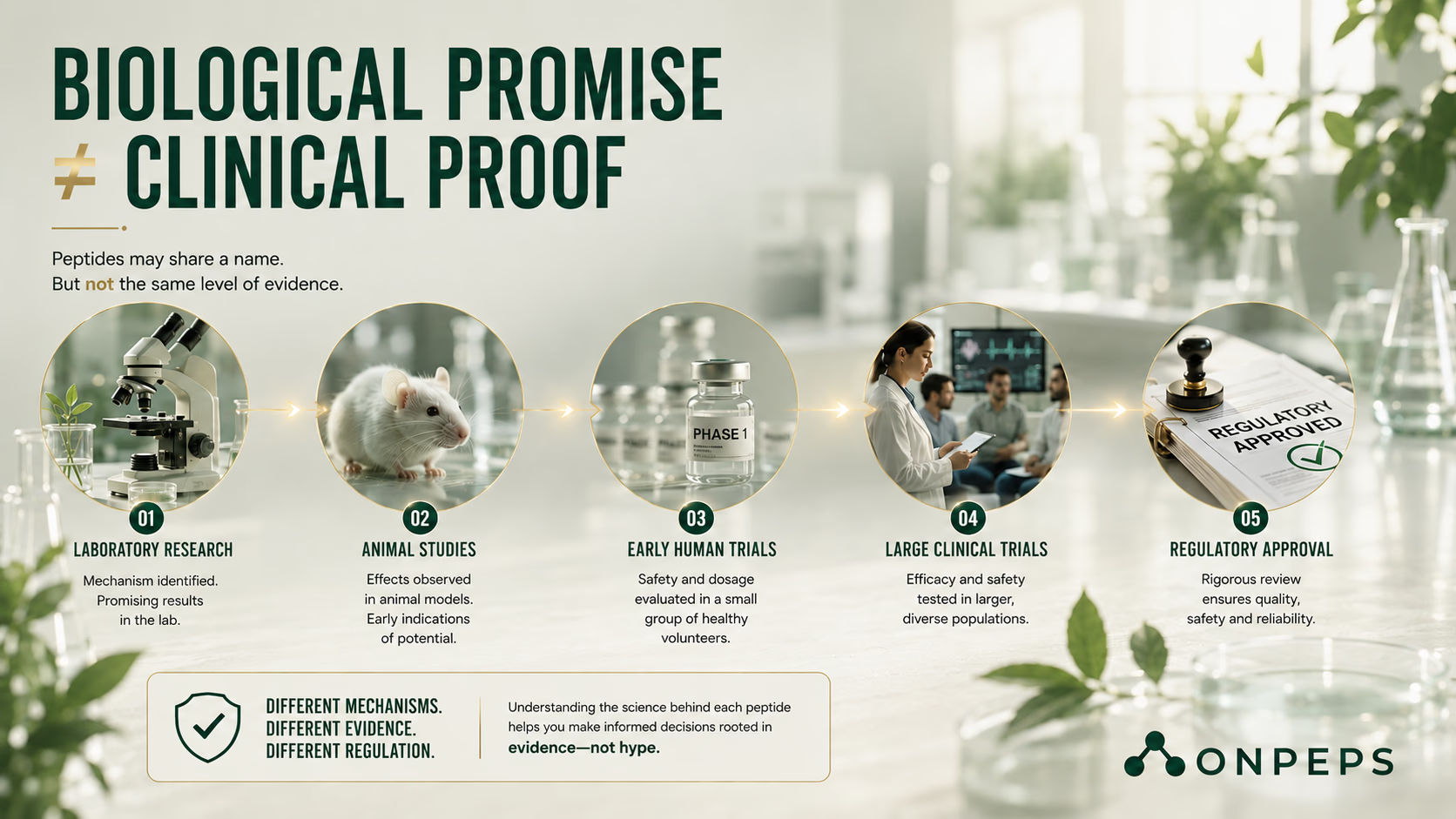
Looking at today’s most-discussed peptides, a common pattern emerges: many show promise in early research, with clear biological effects and growing attention in recovery, body composition, libido, and skin repair. But for most of these peptides, the strongest evidence still comes from preclinical studies and limited human trials.
Why the evidence gap exists
Large-scale clinical data — usually required for full regulatory approval — is severely lacking. Reasons include: peptide research started relatively late, limited funding, difficulty securing patents, and the fact that some peptides are naturally unstable and inconvenient to administer. In addition, early studies are often conducted by the same research group, with insufficient independent verification.
Peptides are in an intermediate stage
Peptides sit between promising preclinical drugs and approved compounds. The pipeline for tissue repair, growth hormone secretagogues, and melanocortin agonists is active, with dozens of compounds in late-stage development or clinical evaluation. This means the current evidence gap is temporary, not final.
Real-world risks for users
The main problem is that most peptide users may be taking these compounds without proper clinical supervision or baseline biomarkers. In addition, peptides purchased from gray-market sources often lack quality control, so safety remains a concern.
Why evidence grading matters
Evidence grading helps distinguish “effective in animal models” from “safe and effective in humans.” The gap between these two requires large-scale randomized controlled trials to fill. For users, learning to recognize evidence strength is the first step in protecting themselves.
Conclusion
Real biological effects are the starting point of research, not the endpoint. Anyone interested in peptides should learn to distinguish between preclinical data, early human trials, and approved indications.